
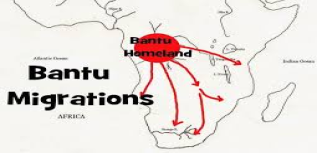
This literature review essay explores Angola's insertion into the cultural plurality of Bantu civilization, analysing how migratory dynamics, language, and complex socio-political structures shaped the identity of the present-day nation. The central objective is to understand Angola not as an isolated entity, but as one of the fundamental pillars of Bantu expansion in Southern Africa, highlighting the cultural continuities and kinship systems that, resisting colonial ruptures, still define the daily life and social praxis of this territory. In terms of methodology, this work is based on a qualitative bibliographic review of a descriptive nature with a reflective focus. Works by historians, anthropologists, and linguists were consulted, cross-referencing data from oral tradition with contemporary written records. The approach prioritizes language that oscillates between scientific rigor and the proximity of a reflective essay, avoiding certain ambiguities and technical dualities to allow for an organic reading. It is concluded that Angolan identity is a living expression of Bantu heritage, manifested both in community organization and spirituality. The study reinforces that looking to the territory's pre-colonial past is not a step backward, but a necessary step to lay the foundations for the future of an Angola that recognizes itself in its own history and its deep connection with the African continent.
| Published in | Humanities and Social Sciences (Volume 14, Issue 2) |
| DOI | 10.11648/j.hss.20261402.11 |
| Page(s) | 74-78 |
| Creative Commons |
This is an Open Access article, distributed under the terms of the Creative Commons Attribution 4.0 International License (http://creativecommons.org/licenses/by/4.0/), which permits unrestricted use, distribution and reproduction in any medium or format, provided the original work is properly cited. |
| Copyright |
Copyright © The Author(s), 2026. Published by Science Publishing Group |
Angola, Bantu Civilization, Migrations
BC | Before Christ |
AD | Anno Domini |
| [1] | ALTUNA, RRA (2006). Traditional Bantu Culture. Missionary Institute of Sociology, Daughter of St. Paul – Angola, Publisher Paulinas – Legal Deposit No. 245 279/06. |
| [2] | ALTUNAGA, JZ and FERNANDES, MC (2008). Angola, geographical atlas. 1st edition, Malaysia. |
| [3] | CHARLES, E. (1980). Angolan Archaeology. Lisbon, Edições 70. |
| [4] | DIOP. CA. (1990). The Cultural Unity of Black Africa. 5th Ed. Chicago: Third World Press. |
| [5] | HUNTINGTON, SP (1997). The clash of civilizations and the reshaping of world order. Côntes, Objetiva. Journal of Regional History, [S. l.], v. 5, n. 1, 2007. Available at: |
| [6] | KAJIBANGA, V. (2003). Racial and Ethnic Groups, Races, Society and Ethnic Communities of Angola. Moscow, Lean Publishers. |
| [7] | MALUMBU, M. (2006). The Ovimbundu of Angola: Tradition, Economy and Organizational Culture. Italy, Ed. Vívere. |
| [8] | MARTINS, JV (2010). Beliefs, divination and traditional medicine of the Tuchokwe of northeastern Angola. |
| [9] | PELISSIER, R. (1986). History of Angolan campaigns. Resistances and revolts 1845-1941. Vol. II, Lisbon, Ed. Estampa. |
| [10] | PONTE, H. (2016). Where does the name Angola come from? An introduction to the study of Angolan history. |
| [11] | REDINHA, J. (1974). Ethnic Distribution of Angola. Luanda, CITA. |
| [12] | SANTOS, E. (1969). Religions of Angola. Lisbon, Overseas Research Board. |
| [13] | SILVA, R. C (1997). Angola and its potential. History. |
| [14] |
UNILAB (2017). Bantu Expansion: Origin, Cultures and Traditions. Practical Manual. Available at:
https://historia.unilab.edu.br/wp-content/uploads/2017/08/Expans%C3%A3o-banta.pdf |
| [15] | VIII State Meeting of History (2016). The Formation of Angola and African Resistances. Feira de Santana. Available at: |
| [16] | WHEELER, D. & PELISSIER, R. (2011). History of Angola. Lisbon, Ink China. Legal Deposit No. 322664/11. |
APA Style
Vicente, E. E. (2026). Angola in the Context of Bantu Civilization. Humanities and Social Sciences, 14(2), 74-78. https://doi.org/10.11648/j.hss.20261402.11
ACS Style
Vicente, E. E. Angola in the Context of Bantu Civilization. Humanit. Soc. Sci. 2026, 14(2), 74-78. doi: 10.11648/j.hss.20261402.11
AMA Style
Vicente EE. Angola in the Context of Bantu Civilization. Humanit Soc Sci. 2026;14(2):74-78. doi: 10.11648/j.hss.20261402.11
@article{10.11648/j.hss.20261402.11,
  author = {Eduardo Ernesto Vicente},
  title = {Angola in the Context of Bantu Civilization},
  journal = {Humanities and Social Sciences},
  volume = {14},
  number = {2},
  pages = {74-78},
  doi = {10.11648/j.hss.20261402.11},
  url = {https://doi.org/10.11648/j.hss.20261402.11},
  eprint = {https://article.sciencepublishinggroup.com/pdf/10.11648.j.hss.20261402.11},
  abstract = {This literature review essay explores Angola's insertion into the cultural plurality of Bantu civilization, analysing how migratory dynamics, language, and complex socio-political structures shaped the identity of the present-day nation. The central objective is to understand Angola not as an isolated entity, but as one of the fundamental pillars of Bantu expansion in Southern Africa, highlighting the cultural continuities and kinship systems that, resisting colonial ruptures, still define the daily life and social praxis of this territory. In terms of methodology, this work is based on a qualitative bibliographic review of a descriptive nature with a reflective focus. Works by historians, anthropologists, and linguists were consulted, cross-referencing data from oral tradition with contemporary written records. The approach prioritizes language that oscillates between scientific rigor and the proximity of a reflective essay, avoiding certain ambiguities and technical dualities to allow for an organic reading. It is concluded that Angolan identity is a living expression of Bantu heritage, manifested both in community organization and spirituality. The study reinforces that looking to the territory's pre-colonial past is not a step backward, but a necessary step to lay the foundations for the future of an Angola that recognizes itself in its own history and its deep connection with the African continent.},
 year = {2026}
}
TY  - JOUR
T1  - Angola in the Context of Bantu Civilization
AU  - Eduardo Ernesto Vicente
Y1  - 2026/03/04
PY  - 2026
N1  - https://doi.org/10.11648/j.hss.20261402.11
DO  - 10.11648/j.hss.20261402.11
T2  - Humanities and Social Sciences
JF  - Humanities and Social Sciences
JO  - Humanities and Social Sciences
SP  - 74
EP  - 78
PB  - Science Publishing Group
SN  - 2330-8184
UR  - https://doi.org/10.11648/j.hss.20261402.11
AB  - This literature review essay explores Angola's insertion into the cultural plurality of Bantu civilization, analysing how migratory dynamics, language, and complex socio-political structures shaped the identity of the present-day nation. The central objective is to understand Angola not as an isolated entity, but as one of the fundamental pillars of Bantu expansion in Southern Africa, highlighting the cultural continuities and kinship systems that, resisting colonial ruptures, still define the daily life and social praxis of this territory. In terms of methodology, this work is based on a qualitative bibliographic review of a descriptive nature with a reflective focus. Works by historians, anthropologists, and linguists were consulted, cross-referencing data from oral tradition with contemporary written records. The approach prioritizes language that oscillates between scientific rigor and the proximity of a reflective essay, avoiding certain ambiguities and technical dualities to allow for an organic reading. It is concluded that Angolan identity is a living expression of Bantu heritage, manifested both in community organization and spirituality. The study reinforces that looking to the territory's pre-colonial past is not a step backward, but a necessary step to lay the foundations for the future of an Angola that recognizes itself in its own history and its deep connection with the African continent.
VL  - 14
IS  - 2
ER  -
Department of Education Sciences, Maravilha Higher Polytechnic Institute, Benguela, Angola




 Share This Article
 Twitter
 Linked In
 Facebook
 Copy
Copy Download